
01
Storm and sump losses
Extract, dry, document. Power outages are a common trigger.
Schaumburg · Inner suburb
Post-1960s homes, finished lower levels, storm and ice-dam losses.
Post-60s
Suburban stock
Sump
Power-out floods
Straight
If we cannot roll, we say

Schaumburg is far enough that we tell you if we can make the window. If we take the file, it is the same documented process.
Established subdivisions and newer developments. Infrastructure is generally younger than the city, but storms, appliance failures, and ice dams still flood finished lower levels. Typical arrival is 45–60 minutes.
(773) 900-8407Request a callback
A real technician from this shop answers. Not a bot. Not an outsourced call center.
Local risks
On these blocks
Extract, dry, document. Power outages are a common trigger.
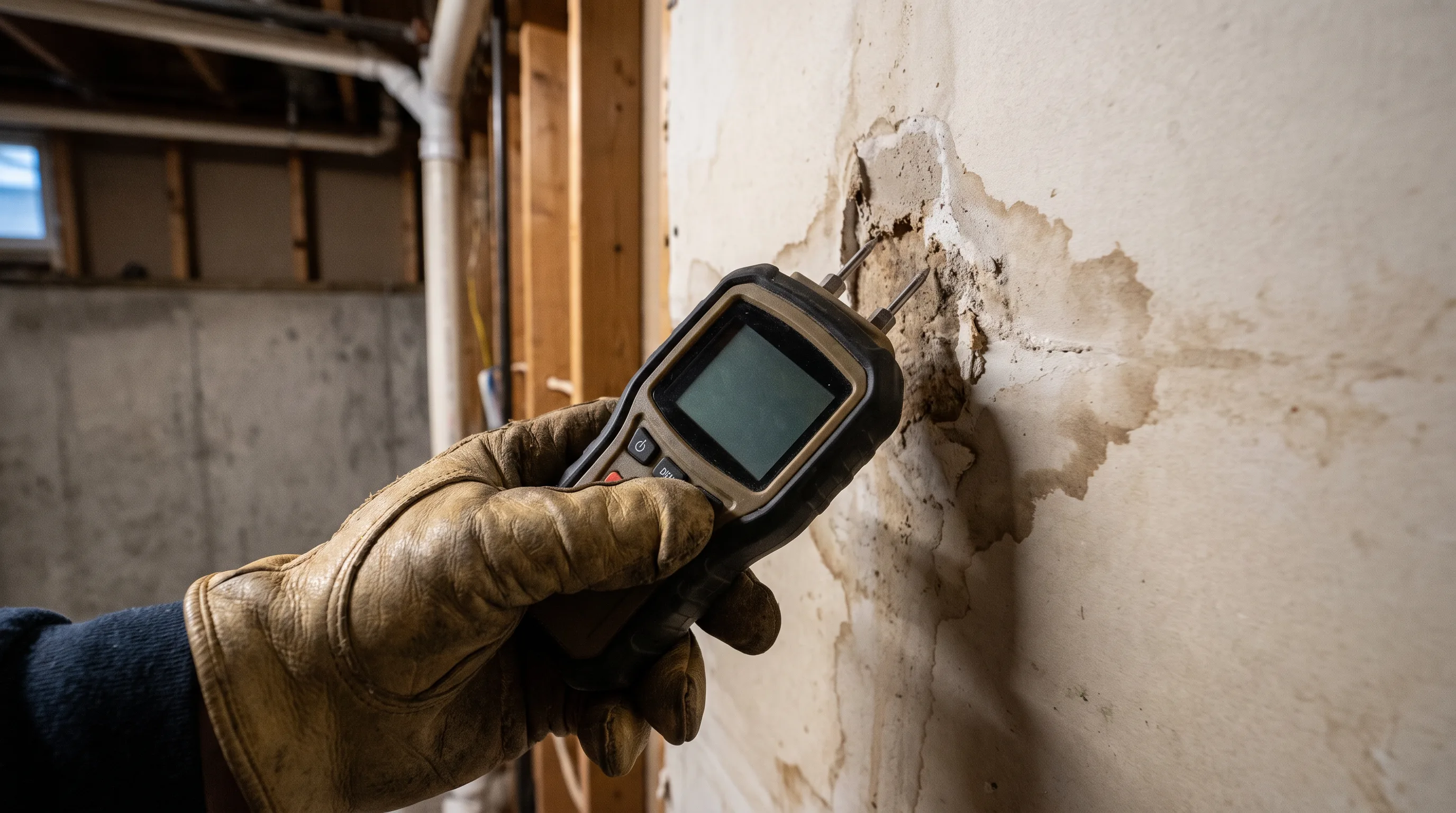
Engineered floors, modern insulation, open plans — water spreads quickly.
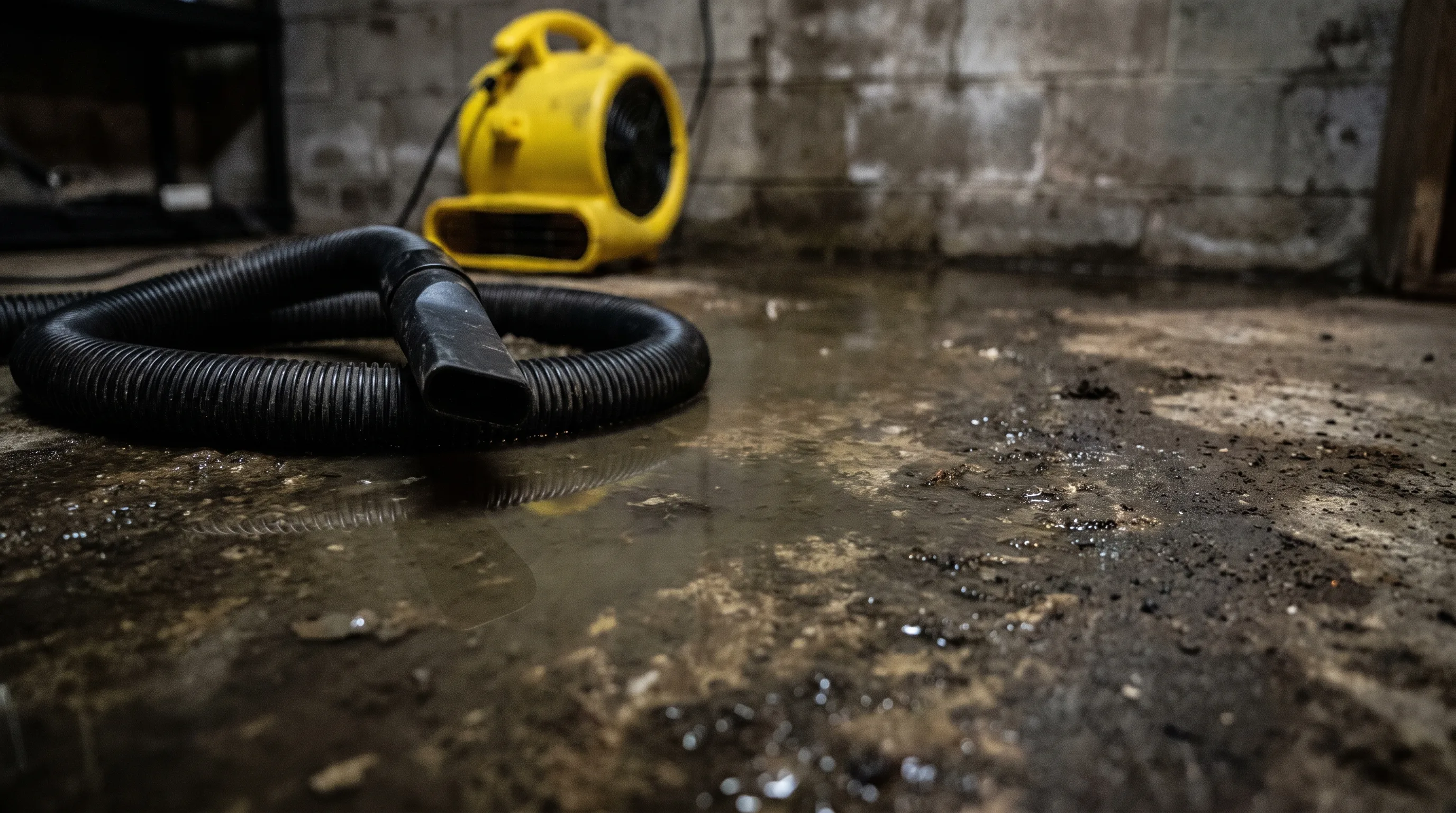
Winter melt into attics and walls.
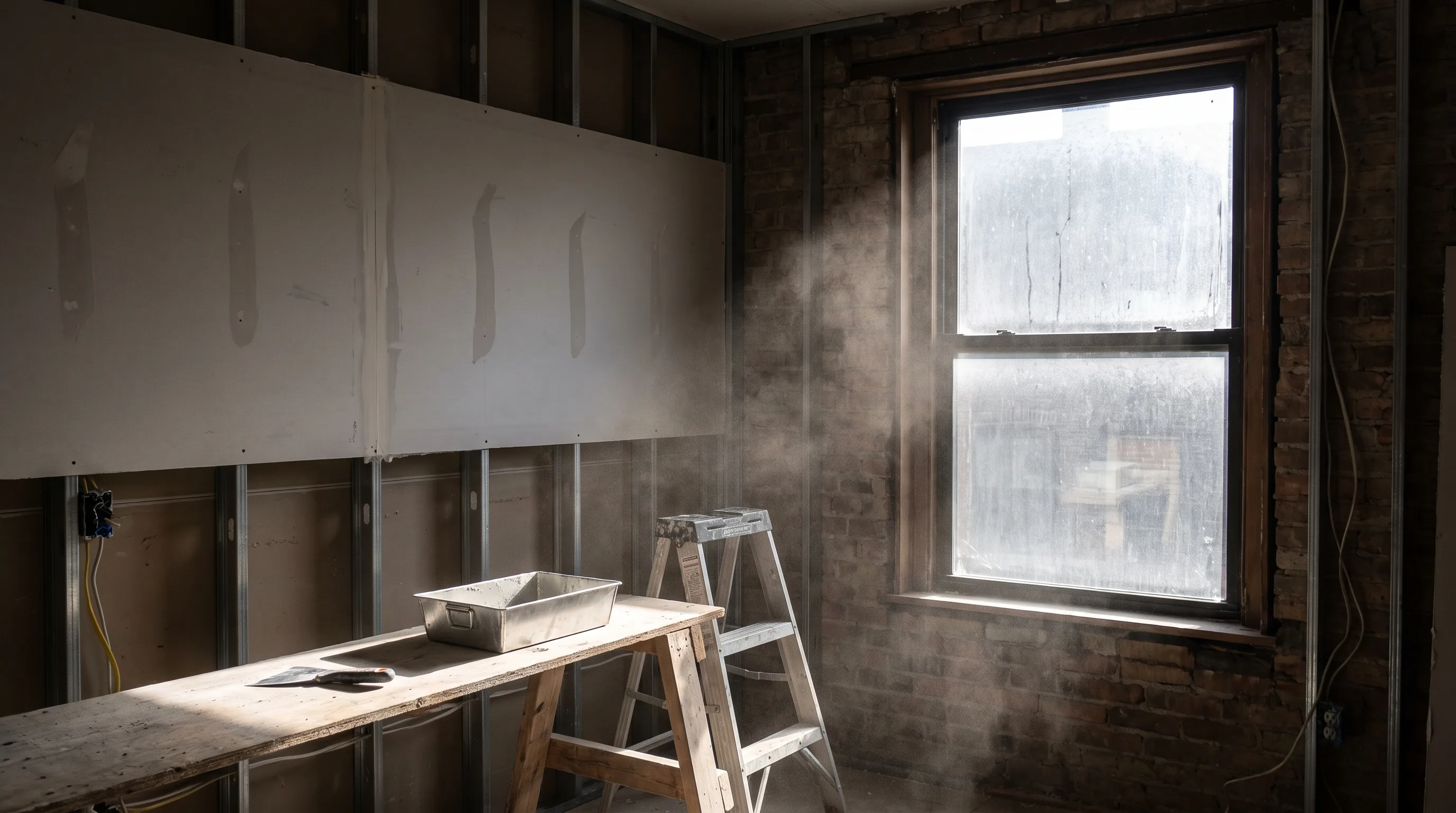
If it was not dried, we remediate and then rebuild.
Inner suburb
If we take the file, it is the same photos, meters, and written scope. If the drive is too far for the emergency window, we say so before you wait.
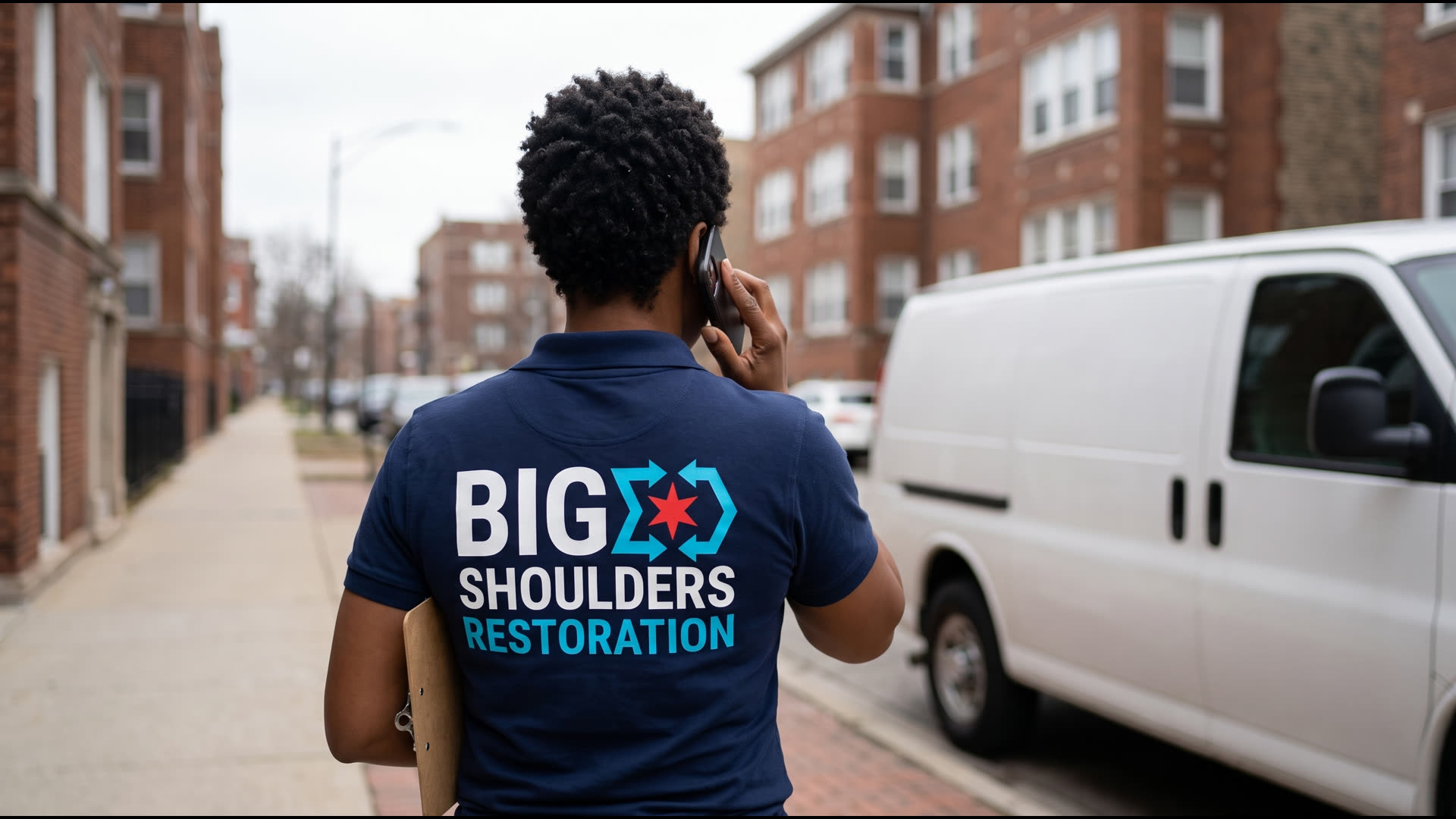
A person on this crew answers — not a bot, not a call center. They gather the loss, tell you what to do until we arrive, and roll a crew.
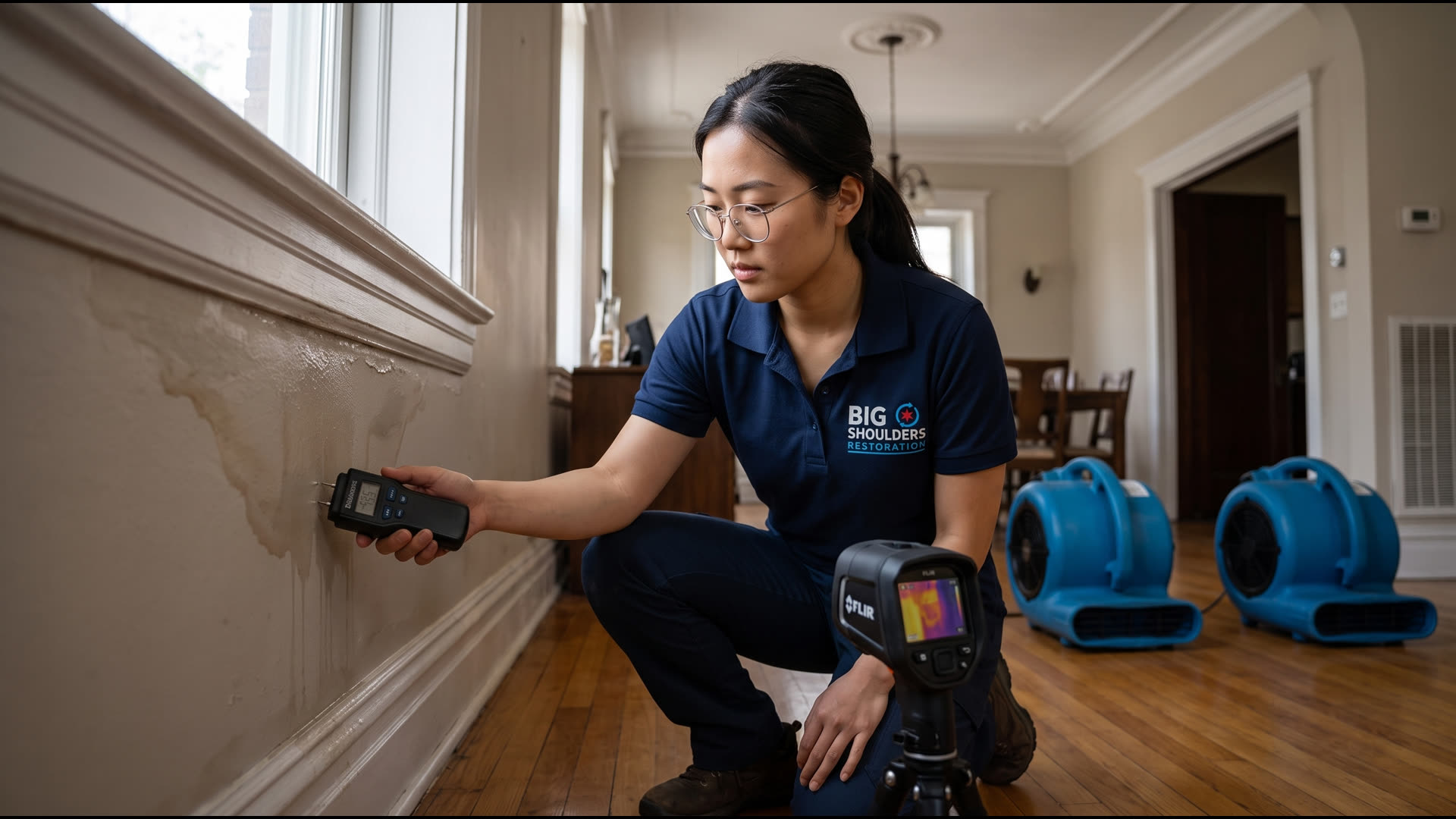
On-site inspection, moisture mapping, and photos before equipment hits the floor.
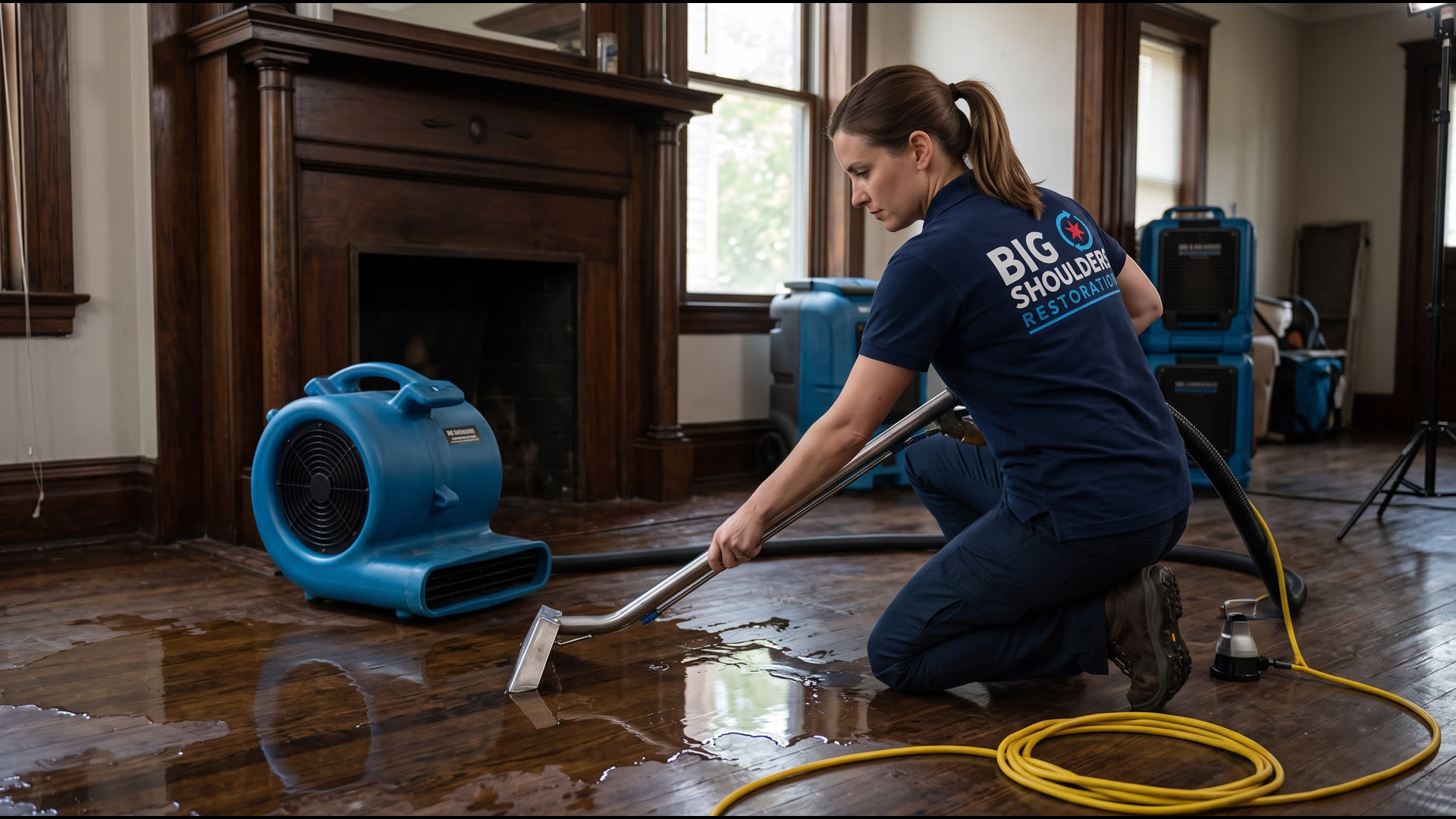
Extract standing water, contain, protect contents, and stop the spread.
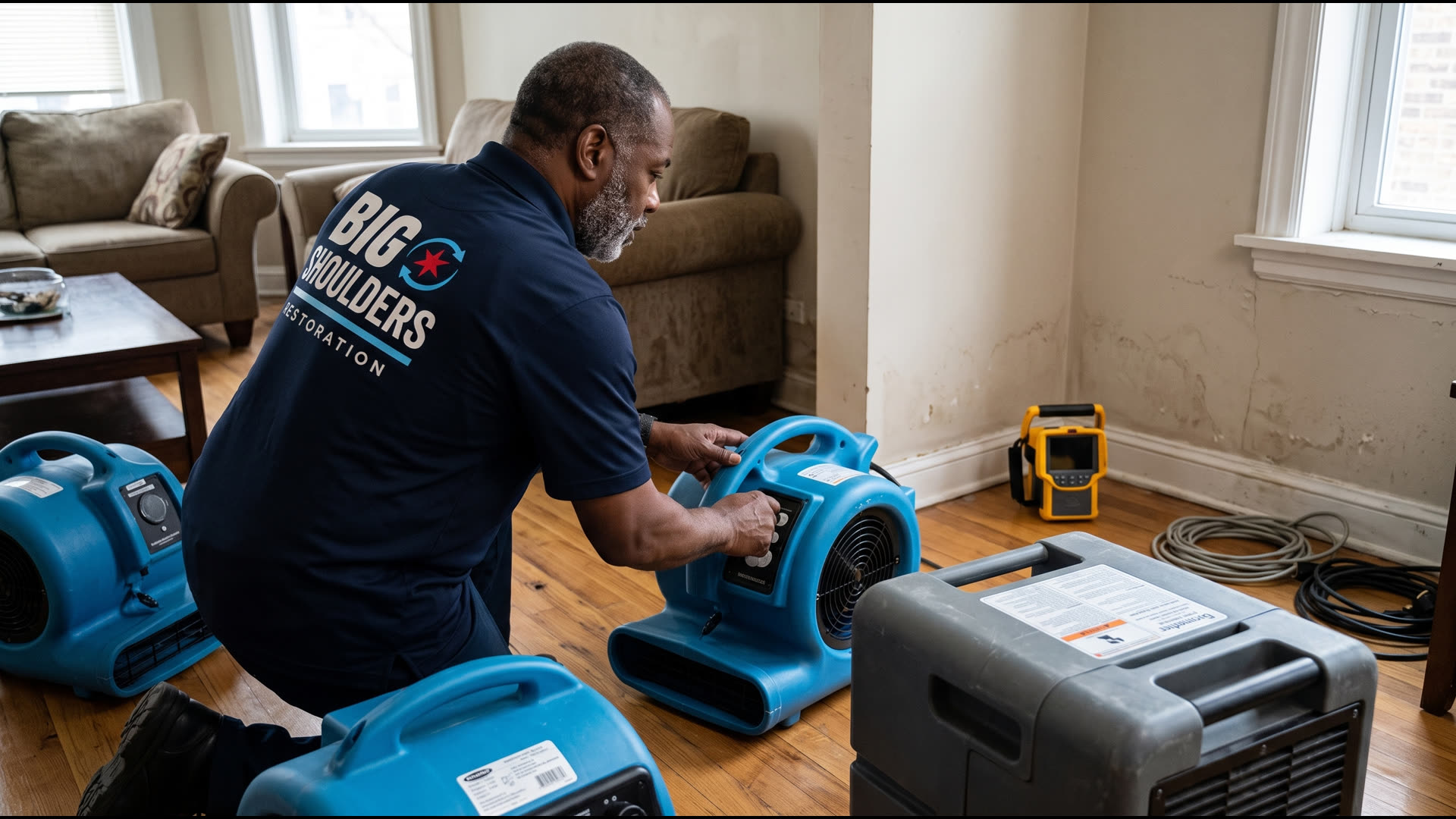
Commercial drying with readings — not guessing by touch.
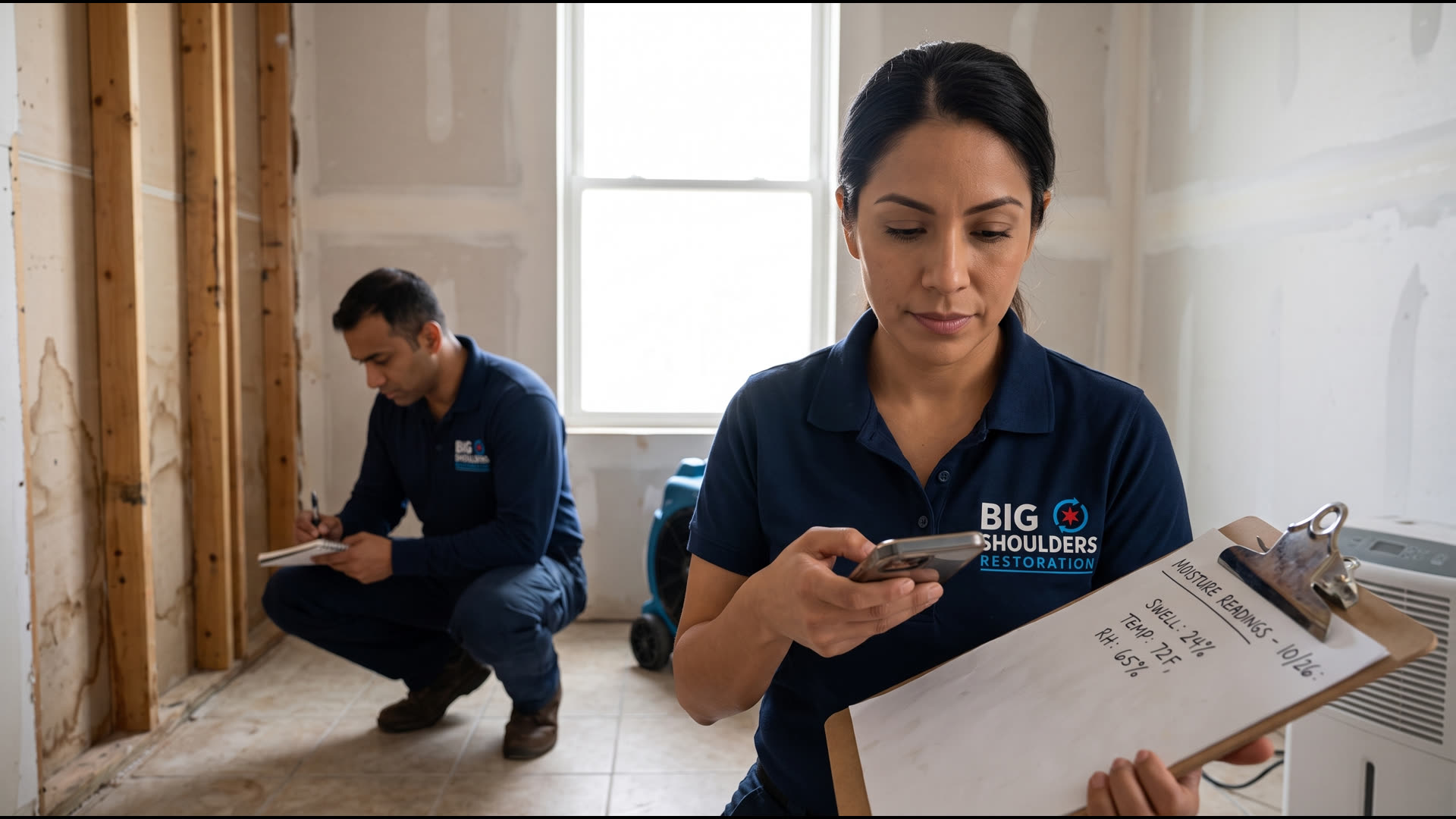
A file the claim can use: photos, logs, and a written scope you also get.
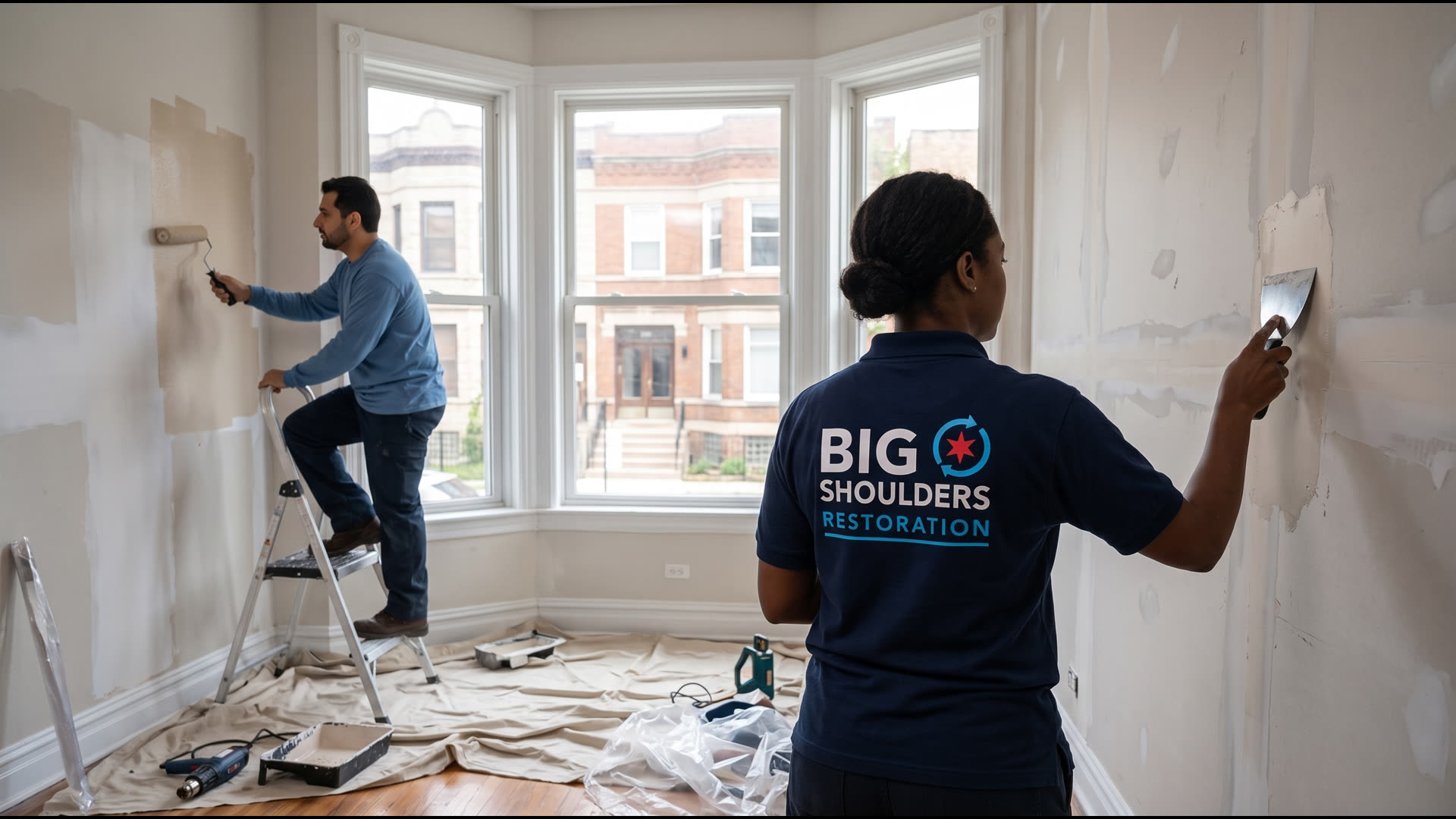
If the structure needs it, we stay through buildback instead of handing you off.
Questions
Typically 45–60 minutes for emergencies, 24/7, all residential areas.
Storm basements, sump failures, appliance leaks, winter ice dams. Fewer ancient pipes — still plenty of water.
Yes. Open plans and engineered floors change how water travels.
Request assessment
A real technician from this shop answers. Not a bot. Not an outsourced call center. Name, phone, ZIP, and what happened. If it cannot wait, call the 24/7 line.
(773) 900-8407Request a callback
A real technician from this shop answers. Not a bot. Not an outsourced call center.